Jul, 16 2026
Pakistan's higher education sector has changed significantly over the last decade. More students now want a degree that builds critical thinking, not just technical skills. That's where liberal arts education comes in.
If you're searching for the best liberal arts universities in Pakistan, you're likely torn between career-focused degrees and something that shapes how you think, write, and solve problems. This guide breaks down what liberal arts education means, why it matters in Pakistan, and which universities do it best.
We'll also show you why BNU stands out as a top choice for students who want a real liberal arts experience.
A liberal arts education gives students a broad foundation across subjects like history, literature, philosophy, political science, and anthropology, rather than narrowing them to a single technical field from day one.
The idea is simple. You learn to think critically, write clearly, and connect ideas across disciplines. Employers value these skills because they don't expire the way specific software skills do.
A liberal arts degree usually includes core courses in the humanities and social sciences, plus room to specialize later. Students read widely, debate often, and work on research projects that force them to defend their arguments. This style of learning traces back to American liberal arts colleges, and Pakistani universities have adapted the model to fit local needs.
Pakistan's job market is shifting. Employers in media, policy, development, and business now look for graduates who can write well, analyze problems from multiple angles, and adapt quickly. A liberal arts degree builds exactly that.
Here's what students gain from a liberal arts education in Pakistan:
Pakistan also has a growing development sector, media industry, and policy space. All three actively recruit liberal arts graduates who can research, write, and think independently.
Several Pakistani universities now offer strong liberal arts programs. Here's an honest look at the top names, what they offer, and where they fit for different students.
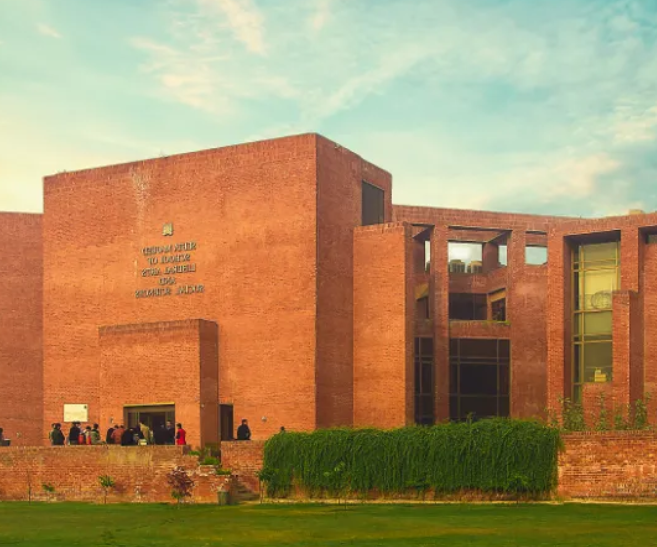
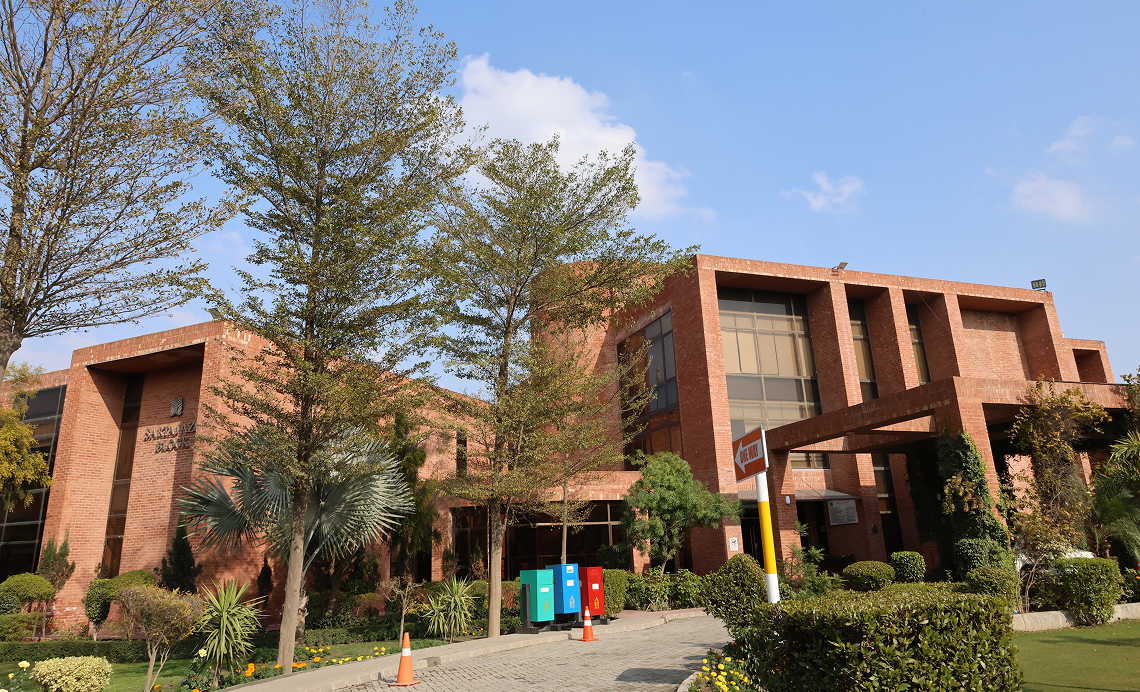
BNU holds a unique position in Pakistan's higher education landscape. It was Pakistan's first not-for-profit liberal arts university, offering both graduate and undergraduate programs. The Seeta Majeed School of Liberal Arts & Social Sciences runs the flagship BS in Liberal Arts & Social Sciences, along with BS in Political Science and BS in Political Science with a specialization in International Relations.
The liberal arts degree at BNU spans 4 years, 8 semesters, and 129 credit hours. Students build a foundation across history, literature, philosophy, anthropology, and political science in the first two years, then choose a specialization in History or Literature, plus optional minors in Media Studies or Theatre, Film and TV. Career paths include academia, research, media, civil services, journalism, public policy, and legal services.
Habib University built its identity around liberal arts and sciences from the start. Founded in 2014, it runs on a philosophy called Yohsin, which centers on critical thinking, ethics, and social responsibility. Class sizes stay small, and faculty come from institutions around the world. It's widely recognized as one of the strongest liberal arts programs in Karachi, particularly for students who want an interdisciplinary, US-style curriculum.
FCCU is the oldest liberal arts institution on this list, founded in 1864. It holds HEC "W" category recognition and ranks 851st in the QS Asian University Rankings 2026, with a SCImago ranking of 83rd in Pakistan. FCCU is also the only Pakistani member of the Global Liberal Arts Alliance. Its historic green campus and long academic tradition make it a solid pick for students who value institutional legacy.
LUMS is better known for business and law, but its School of Humanities and Social Sciences offers a genuine liberal arts track. The academic environment is intellectually demanding, and the alumni network is strong across corporate and policy sectors in Pakistan.
AKU is primarily a medical and health sciences institution, but its Institute for the Study of Muslim Civilisations gives students a liberal arts angle focused on history, culture, and global Muslim societies. It suits students specifically interested in cultural and historical research rather than a full liberal arts core.
BNU earns its place at the top of this list for a few clear reasons.
First, it's Pakistan's first not-for-profit liberal arts university. That status shapes how the institution operates. Surplus funds go back into scholarships, faculty development, and campus resources instead of shareholder profit.
Second, the curriculum design is genuinely interdisciplinary, not just liberal arts in name. Students study history, philosophy, literature, anthropology, and political science together before choosing a specialization. This mirrors how top liberal arts colleges in the US structure their programs, and it gives BNU graduates a real edge in flexible thinking.
Third, BNU's faculty includes recognized scholars publishing active research. Dr. Tariq Rahman, Dean of the School of Education, recently published influential work on Ghalib. Vice Chancellor Dr. Moeed W. Yusuf has published on policy issues in Friedrich-Ebert-Stiftung Asia. This kind of active scholarship filters directly into classroom teaching.
Fourth, BNU's alumni network shows real career outcomes. Graduates from the liberal arts program have gone on to international recognition, including an alumna honored for her research on Attan dance published in DAWN, and graduates working across media, film, and cultural sectors both in Pakistan and abroad.
Cost is often the biggest barrier to liberal arts education, and BNU addresses this directly. The university has awarded over 1.1 billion rupees in scholarships over the past two decades.
Current scholarship options include:
Beyond scholarships, BNU also connects students to donor-funded programs such as the Madanjeet Singh Art Scholarships for South Asian students and the Rahimeen Ahmad Scholarship Fund, which guarantees a full four-year scholarship for at least one female student annually.
Public universities such as the University of the Punjab and Quaid-e-Azam University offer liberal arts subjects with much lower tuition, backed by established academic histories. However, these programs often come with larger class sizes and less emphasis on interdisciplinary study or curriculum design.
Private institutions like BNU, Habib University, FCCU, and LUMS charge higher tuition but provide advantages such as smaller class sizes, more direct faculty engagement, structured interdisciplinary curricula, and stronger career support services. Among them, BNU’s not-for-profit model stands out: tuition revenue is reinvested in scholarships and campus resources instead of being directed toward profit, helping narrow the value gap between the affordability of public institutions and the quality-driven experience of private ones.
Before you apply, think through these points:
Yes. Liberal arts graduates in Pakistan find roles in media, publishing, civil services, development, research, and policy work, especially as employers increasingly value critical thinking and communication skills.
BNU stands out as Pakistan's first not-for-profit liberal arts university, with a structured interdisciplinary curriculum, strong scholarship access, and dedicated campus facilities. Habib University and FCCU are also strong choices depending on your city and budget.
Fees vary by institution. At BNU, the 2026–27 per-semester fee for the BS in Liberal Arts & Social Sciences is 321,000 PKR, with additional one-time admission and security deposit charges.
Yes. BNU alone offers merit-based, need-based, sports, and national talent scholarships, some covering full tuition. Other universities like FCCU and Habib also offer merit and need-based aid.
Common career paths include journalism, publishing, public relations, civil services, academia, research, NGO and development work, and policy analysis.

BNU, NUST, or FAST-NUCES? Check fees, admission criteria & scholarships to find the right software engineering university in Pakistan.

Explore the best liberal arts universities in Pakistan, compare programs, fees and scholarships & see why BNU leads the way in liberal arts education.

BNU launches Pakistan's first Drug-Free Safe Campus initiative, featuring the Substance Use Control Program & psychological first aid training for students.

Choosing a university is one of the biggest decisions you will make. And in Lahore, the options feel endless.

Pakistan has more than 200 universities. Public sector, private sector, general, and specialized, the list is long.

Computer science is no longer a niche field. It sits at the center of almost every industry today.