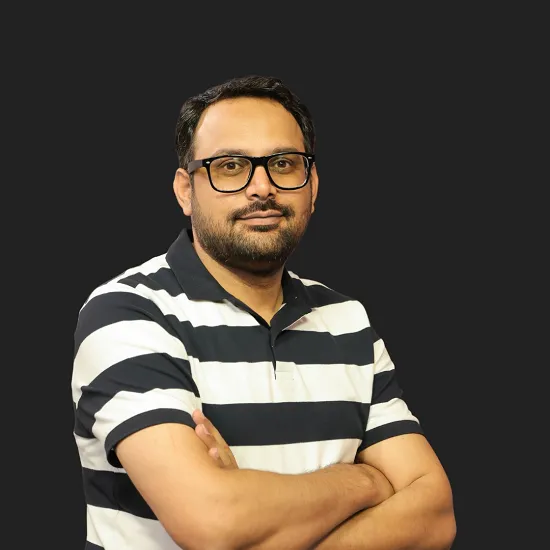
Dr. Farahat Ali SMC - BNU

Dr. Farahat Ali

Researcher & Academician

Assistant Professor

School of Media and Mass Communication (SMC)

Dr. Farahat Ali, a Cambridge-trained scholar in communication studies, explores how work-family dynamics influence communication through relational turbulence theory. With over nine years of teaching experience, he has contributed to media framing and political communication research. His achievements include awards, publications, and expertise in statistical analysis tools like SPSS and R.

Bio

Dr. Farahat Ali is a distinguished scholar in the field of communication studies, with a PhD and a research fellowship from the University of Cambridge, where he worked under the guidance of Professor Brendan Burchell. His academic focus revolves around understanding how work-family dynamics influence communication patterns, explored through the lens of relational turbulence theory. His research delves into the complexities of communication within the family and professional spheres, offering insights into how personal and professional challenges shape individual and group interactions. With extensive expertise in both qualitative and quantitative research methodologies, Dr. Ali bridges the gap between media, communication, and social sciences, contributing valuable interdisciplinary perspectives to the field.

With over nine years of teaching experience, Dr. Ali has demonstrated a passion for developing future scholars and fostering an academic environment grounded in research excellence. Prior to his tenure at Beaconhouse National University (BNU), he served as an Assistant Professor at the University of Central Punjab (UCP), where he made significant contributions to curriculum development, research supervision, and academic administration. As the Head of the Faculty Research Committee, he played a pivotal role in shaping the research culture within the institution. Dr. Ali has authored numerous articles published in reputable journals such as The Family Journal and Women’s Studies International Forum, where his work on media framing and political communication has been widely recognized. His achievements have been acknowledged through several awards, including the Best Researcher Award at UCP and a research grant from the European Association of Social Psychology.

Dr. Ali’s proficiency in advanced statistical tools like SPSS and R Studio further underscores his research expertise. His commitment to mentoring students and advancing the field of media and communication studies is evident in his dedication to creating a research-driven academic environment. His work continues to influence both academic and practical discourses on media, communication, and social dynamics, making him a prominent figure in his field both in Pakistan and internationally.

Academics

  • PhD in Communication Studies, University of Cambridge
  • MPhil in Communication Studies, University of the Punjab, Lahore
  • BS in Mass Communication, University of Sargodha

Experience

  • Assistant Professor, School of Media and Mass Communication, Beaconhouse National University (2025–Present)
  • Visiting Scholar, Department of Sociology, University of Cambridge, UK (2022)
  • Assistant Professor, PhD Program Coordinator, University of Central Punjab (2019–2025)
  • Lecturer Cum Research Associate, University of Management and Technology (2017–2019)
  • Research Assistant, Journal of Media Studies (2016–2017)
  • Visiting Lecturer, University of the Punjab (2016–2017)
  • Social Media Manager, Laqaaf Technologies (2014–2016)
  • Social Media Executive, Pakistan Telecommunication Limited (2013–2014)

Awards and Honors

  • Won a Best Researcher Award from the University of Central Punjab, Lahore, Pakistan
  • Won a research grant of $1500 from European Association of Social Psychology for the project "Predictors of Political Violence"
  • Recipient of the International Research Support Initiative Program of Higher Education Commission of Pakistan
  • Received a silver medal for securing the second position in BS Mass Communication
  • Internationally Recognized Expert and Trainer Certification of NVivo
  • Internationally Recognized Expert and Trainer Certification of Mendeley

Memberships

  • Focal Person and member of the International Association for Media and Communication Research (IAMCR) through the institutional membership of University of Central Punjab for the year 2024
  • Member of the National Association for Media Literacy Education (NAMLE)

Conference Presentations

  • Dawood, M., & Ali, F. (2025, February 18–19). Sharenting in Pakistan: Parental sharing practices, children's digital identities, and ethical implications. 10th MCAP-BNU International Media Conference: Bridging Divides: Media Literacy for Informed and Connected Societies, Lahore, Pakistan.
  • Zahid, N., & Ali, F. (2025, February 18–19). Framing environmental crisis: A content analysis of smog visuals in Pakistani newspapers. 10th MCAP-BNU International Media Conference: Bridging Divides: Media Literacy for Informed and Connected Societies, Lahore, Pakistan.
  • Ali, F. (2024, May 29–30). Mapping hate speech in YouTube user comments targeting Christian and Ahmadi minorities in Pakistan: A qualitative content analysis. 2nd International Media Conference, FMMC, University of Central Punjab, Lahore, Pakistan.
  • Ali, F. (2024, May 29–30). Exploring the motivations, interactions, and resilience strategies of university student TikTokers in Lahore, Pakistan. 2nd International Media Conference, FMMC, University of Central Punjab, Lahore, Pakistan.
  • Ali, F. (2024, May 29–30). Exploring environmental communication and stakeholder engagement in Pakistan's fertilizer industry through Facebook. 2nd International Media Conference, FMMC, University of Central Punjab, Lahore, Pakistan.
  • Ali, F. (2024, January 24–25). Unlocking relationship dynamics: Exploring the interplay of attachment styles, communication strategies, and relationship quality in dating couples. 2nd International Media and Communication Conference, SMCS, University of Management and Technology, Lahore, Pakistan.
  • Ali, F. (2024, January 24–25). Why are university students avoiding the news? An exploratory study examining contributory factors. 2nd International Media and Communication Conference, SMCS, University of Management and Technology, Lahore, Pakistan.
  • Ali, F. (2023). An Iconographical Interpretation of Pakistan's Recent Flood-Related Images on UN's Instagram Posts. 1st International Conference on Media & Communication Research, Institute of Media & Communication Studies, Bahauddin Zakariya University, Multan, Pakistan.
  • Ali, F. (2020). Closing the gender gap through social media: Political Engagement in Pakistan. AMCAP-BUKC International Conference, Karachi, Pakistan.
  • Ali, F. (2020). Exposure to online hate in four Asian countries (Pakistan, India, Bangladesh, and Sri Lanka) and individual factors: A cross-national survey. International Association for Media and Communication Research, Online Session.
  • Ali, F. (2020). Impact of smart media addiction regarding mindfulness, strategies to cope with addiction, and emotional exhaustion’s consequences: A case study of youth in Pakistan. AMCAP-BUKC International Conference, Karachi, Pakistan.
  • Ali, F. (2020). Motivation to read, comment, and like hate speech content on Facebook: An exploratory study. International Conference on Media & Conflict, Islamabad, Pakistan.
  • Ali, F. (2019). Cyber-entrepreneurial intentions and adoption of information technology among mass communication students. AMCAP International Media Conference, SZABIST Islamabad, Pakistan.
  • Ali, F. (2019). Depiction of terrorism and orientalism: A study on Western comic books. International Conference on Media and Conflict, Bahria University Islamabad, Pakistan.
  • Ali, F. (2019). Fear of isolation and online political engagement: Mediating role of attention and anonymity seeking. The National Conference on ‘Multidisciplinary Research (NCMR-2019), University of Okara, Okara, Pakistan.
  • Ali, F. (2019). Mocking or joking: Analysis of the satirical language of leading infotainment programs on Pakistani news channels. International Conference on ‘Media Education in Pakistan: Challenges and Opportunities’, SZABIST Islamabad, Pakistan.
  • Ali, F. (2019). The role of smart media in enhancing the distance learning capability: Teacher’s motivation, grades, and preferences. International Conference on Distance Learning: Research and Innovation for a Digital Society, Thailand.

Journals Reviewer

  • Social Science Computer Review, published by Sage Journals, has an impact factor of 4.7.
  • European Political Science Review, published by Cambridge University Press, has an impact factor of 4.143.
  • Psychology Research and Behavior Management, published by Taylor and Francis, has an impact factor of 4.143.
  • Interpersona: An International Journal on Personal Relationships, published by PsychOpen. The journal is indexed in Scopus.

Research Publications

  • Ali, F., Gharaibeh, F. A., & Awais, M. (2025). Work–Family Conflict and Conflict Resolution Styles of Married Academicians: An Application of Relational Turbulence Theory. The Family Journal, 0(0). https://doi.org/10.1177/10664807251321520 (X-Category)
  • Tatheer, I., Sirhindi, T., & Ali, F. (2025). Digital Media Literacy in Higher Education: A Curriculum Analysis of Undergraduate Media Programs in Pakistan. Media Education (Mediaobrazovanie), 21(1), 121–137. https://doi.org/10.3187/me.2025.1.121 (X-Category)
  • Awais, M., & Ali, F. (In Press). Headlines of a Warming World: A Transformative Approach to the Analysis of Climate Change in Leading English Newspapers of Pakistan (2012–2023). Journalism Studies, Taylor and Francis. (In press)
  • Awais, M., Ali, F., & Kanwal, A. (2022). Exposure to Multiple Communication Channels and Preventive Behaviors during COVID-19 in Pakistan: An Application of the Extended Parallel Process Model. Journal of Media Studies, 37(1), 151–174.
  • Ali, F., & Saleem, N. (2022). Relationship Between Conflict Resolution Styles and Marital Satisfaction among Married Academicians. Gomal University Journal of Research, 38(3), 300–318.
  • Awais, M., & Ali, F. (2022). When Technology Becomes a Policing Agent: Effects of Raids on Restaurants in Leading Crime Shows on the Youth of Pakistan. International Journal of Media and Information Literacy, 7(1), 18–27. https://doi.org/10.13187/ijmil.2022.1.18 (X-Category)
  • Asad, K., Ali, F., Awais, M. (2022). Personality Traits, Narcissism, and TikTok Addiction: A Parallel Mediation Approach. International Journal of Media and Information Literacy, 7(2), 293–304. https://doi.org/10.13187/ijmil.2022.2.293
  • Shaheen, H., Ali, F., Awais, M., & Saeed, M. (2021). Health-Related Information Seeking During COVID-19: Testing the Comprehensive Model of Information Seeking on University Students of Pakistan. International Journal of Media and Information Literacy, 6(1), 201–210. https://doi.org/10.13187/ijmil.2021.1.201 (X-Category)
  • Awais, M., & Ali, F. (2021). Social Media Exposure and Preventive Behaviors against COVID-19 in Pakistan. Journal of Media Studies, 36(1), 23–52.
  • Maqbool, K., Ali, F., Awais, M., & Naeem, M. (2021). Social Media Use and Self-Sexualization Behavior Among University Girls: A Serial Mediation Approach. Media Education (Mediaobrazovanie), 17(2), 338–349. https://doi.org/10.13187/me.2021.2.338
  • Ahmad, H. M., Rizvi, W. R., & Ali, F. (2021). Fearing the Effect of Hollywood, Bollywood, and Lollywood Films on Crime in Punjab. Journal of Media & Communication, 1(2), 1–24.
  • Saeed, M., & Ali, F. (2021). Consumption of Sexually Explicit Content through Web Series and Emerging Adults' Sexual Objectification: An Empirical Study. Media Education (Mediaobrazovanie), 17(2), 378–390. https://doi.org/10.13187/me.2021.2.378
  • Saeed, M., Ali, F., & Nawaz, N. (2021). When Fear Leads Towards Preventive Measures: A Study of Newspapers’ Coverage and Public Perception of the COVID-19 Pandemic. Journal of Peace, Development, and Communication, 5(1), 393–401. https://doi.org/10.36968/JPDC-V05-I01-33
  • Ali, F., Awais, M., & Faran, M. (2021). Social Media Use and Political Polarization: The Mediating Role of Political Engagement and Political Loyalty. International Journal of Media and Information Literacy, 6(1), 34–45. https://doi.org/10.13187/ijmil.2021.1.34
  • Ahmad, I., Fatima, M., & Ali, F. (2021). News Media Use and Civic Engagement: The Mediating Role of Social Capital and Civic Accountability. Media Education (Mediaobrazovanie), 17(2), 177–188. https://doi.org/10.13187/me.2021.2.177
  • Awais, M., Ali, F., & Kanwal, A. (2020). Individual-Level Factors and Variation in Exposure to Online Hate Material: A Cross-National Comparison of Four Asian Countries. Journal of Media Studies, 35(2), 127–164.
  • Zaidi, A., Hanan, A., Ali, F., & Awais, M. (2020). Media Objectification and Women's Clothing Buying Behavior: Social Comparison and Self-Gratification as Mediators. International Journal of Media and Information Literacy, 5(2), 227–236. https://doi.org/10.13187/ijmil.2020.2.227
  • Ali, F., Siddique, A., Usman, M., & Awais, M. (2020). Fear of Missing Out and Psychological Well-Being: The Mediating Role of Compulsive Use and Social Comparison. Pakistan Journal of Social Issues, 11(1), 82–97.
  • Awais, M., Hameed ur Rahman, B., Ali, F., & Zulfiqar, A. (2020). Laugh Labs and Their Treatment: Analysis of the Satirical Language of Leading Infotainment Programs of Pakistani News Channels. Journal of Media Studies, 35(1), 103–135.
  • Ali, F., & Rahman, B. H. (2019). Political Bias in Talk Shows: A Case of MQM in Local Bodies Election 2015. Journal of Media Studies, 33(1), 1–23.

Contact

  • Email Address: farahat.ali@bnu.edu.pk
© 2025 BNU.
Powered bytossdown.com