Effective Narrative Building for Media and Strategic Communication

Effective Narrative Building for Media and Strategic Communication

June 06–07, 2026


In an era where perception shapes power, the ability to craft and command a compelling narrative has become an indispensable professional skill. This intensive two-day workshop on Effective Narrative Building for Media and Strategic Communication brings together journalists, communication officers, policy professionals, and graduate students for a hands-on exploration of how stories are built, told, and made to stick. Participants will move from the foundational theory of narrative construction to a candid diagnosis of Pakistan's own communication challenges, sharpen their analytical edge by dissecting real-world interviews with prominent public figures, and ultimately step into the hot seat themselves in a BBC Hard Talk-style simulation guided by an expert panel. Limited to a curated cohort of 25 to 30 participants, the program promises rigorous engagement, honest critique, and practical tools that can be put to work the very next day.

Why Narrative Building?

Narrative now drives diplomacy, policy, and public trust as powerfully as the underlying facts themselves. For Pakistan in particular, a persistent gap between the country's realities and the stories told about it has carried real strategic and reputational costs. By equipping journalists, officials, and communicators with the theory, structure, and punch-line craft of effective storytelling, the program builds capacity where it is most urgently needed. The Hard Talk simulation and interview-analysis modules ensure that learning is not abstract but tested under the same pressure participants will face in the real world. The result is a cohort better prepared to shape conversations rather than merely react to them — a skill of national consequence.

  • Lecture-Discussion – Concise expert presentations on narrative theory and frameworks, immediately opened up for questions and dialogue to bridge concept and context.
  • Case Study Analysis – Examination of international and Pakistani communication examples to draw practical lessons from real successes and failures.
  • Socratic Dialogue – Guided, question-led discussion that pushes participants to interrogate assumptions and co-construct a sharper diagnosis of narrative gaps.
  • Individual Drafting Exercises – Short, focused writing tasks that translate theory into personal practice, with peer and facilitator critique.
  • Group Interview Analysis – Structured small-group review of curated video interviews, culminating in presentations that move from critique to concrete recommendations.
  • Simulation-Based Learning – A BBC Hard Talk-style role-play that places participants under realistic interview pressure to test narrative skills in action.
  • Expert Panel Feedback – Immediate, structured critique from seasoned resource persons after every exercise, ensuring participants leave with personalized, actionable guidance.
  • Reflective Debrief – A closing session where participants distill takeaways and commit to one specific change in their own communication practice.
  • Foundational Understanding – Understand the foundational theory and practice of narrative building and its role in strategic communication.
  • Compelling Storytelling – Identify the key elements of compelling storytelling and apply them to real-world communication scenarios.
  • Message Development – Craft effective punchlines and key messages that anchor a broader narrative.
  • Critical Narrative Evaluation – Critically evaluate Pakistan’s current narrative-building practices, identify gaps, and propose concrete improvements.
  • Media Interview Analysis – Analyze media interviews through the lens of narrative effectiveness and offer evidence-based recommendations.
  • Applied Communication Skills – Demonstrate narrative-building competence under pressure through a simulated interview exercise with expert feedback.

The workshop is open to a diverse cohort of up to 25–30 participants drawn from the following groups:

  • Working Journalists – Professionals actively engaged in reporting, analysis, and news production across media sectors.
  • Media Professionals – Practitioners from print, broadcast, and digital platforms seeking to strengthen strategic communication and storytelling skills.
  • Communication Officers – Individuals responsible for organizational messaging, stakeholder engagement, and institutional communication.
  • Public Affairs Personnel – Professionals working in government ministries and departments managing public communication and policy outreach.
  • Think Tank & Policy Professionals – Individuals working at or aspiring to join strategic think tanks and policy research institutions.
  • PR & Corporate Communication Practitioners – Professionals involved in public relations, reputation management, and national or international outreach campaigns.
  • Graduate Students – Students of journalism, mass communication, political science, and international relations aiming to build expertise in narrative strategy and media communication.

Meet our Team

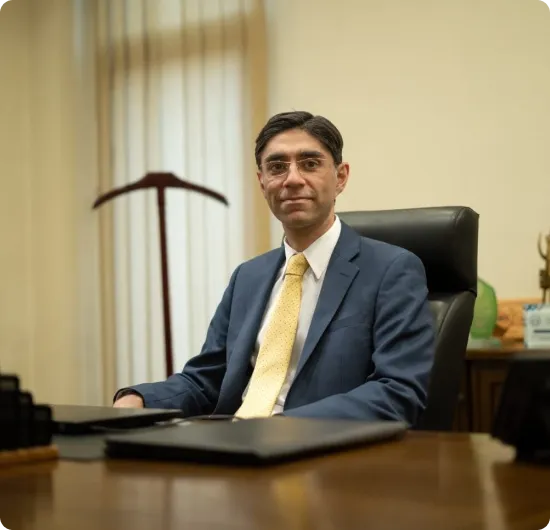
Dr. Moeed Yusuf

Dr. Moeed Yusuf

Lead Facilitator

Vice Chancellor — Leading authority on Pakistan's strategic communication, foreign policy, and national security narrative. Former National Security Adviser to the Prime Minister of Pakistan.

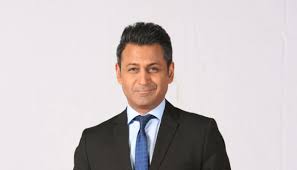
Fahad Hussain

Mr. Fahad Hussain

Resource Person

One of Pakistan most recognized broadcast journalists and media analysts. Brings decades of frontline experience in narrative framing, political communication, and media strategy.

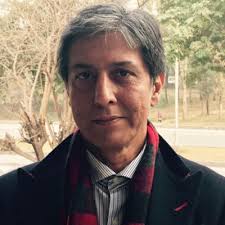
Ijaz Haider

Mr. Ijaz Haider

Resource Person

Renowned security and strategic affairs analyst. A veteran commentator on defence, geopolitics, and Pakistan's positioning in international discourse.

Workshop Structure and Module Descriptions

Module 1 — Foundations of Narrative Building and Storytelling

This module lays the conceptual groundwork for the entire workshop. Participants are introduced to narrative theory and its practical application in strategic communication. The module covers the distinction between information, messaging, and narrative; the role of emotion, identity, and values in narrative construction; the structural elements of compelling storytelling (the story arc, the protagonist, the conflict, the resolution); and the art of crafting a memorable and effective punchline that anchors a broader narrative.

The session will be conducted in a lecture-discussion format, drawing on international case studies from countries that have successfully built and sustained strong national narratives. Participants will undertake a short individual exercise in drafting a three-sentence narrative on an assigned theme, which will be shared and briefly critiqued in plenary.

Module 2 — Pakistan as a Case Study: Diagnosing the Narrative Gap

Led by the Vice Chancellor, this module shifts the focus to Pakistan's specific narrative challenges. It begins with a structured presentation on Pakistan's communication history — where it has fallen short, why those shortfalls occurred, and what structural, institutional, and cultural factors have contributed to an inconsistent and often reactive national narrative.

The session then transitions into a highly interactive, Socratic discussion in which participants are invited to offer constructive critique of current narrative-building practices. The VC will moderate this dialogue, encouraging participants to interrogate assumptions, propose alternative framings, and identify actionable opportunities for improvement. The goal is not to rehearse grievances but to build a shared, evidence-based diagnosis that sets the stage for the practical work ahead.

Module 3 — Interview Analysis: From Critique to Recommendation

In this module, participants are shown four carefully curated video interviews featuring prominent Pakistani government officials, policymakers, or public figures who play, or have played, a significant role in shaping Pakistan's external narrative. The interviews are selected to represent a range of contexts: a crisis communication scenario, an economic diplomacy pitch, a cultural or soft-power narrative, and a geostrategic positioning interview.

After each interview (or a curated excerpt), participant groups are given structured time to prepare short presentations, of five to seven minutes each, in which they assess the narrative effectiveness of the interview, identify missed opportunities, and propose specific improvements. Resource persons will provide feedback after each group presentation. This module is designed to develop analytical precision and translate critique into actionable guidance.

Module 4 — Hard Talk Simulation: Narrative Under Pressure

The final and most experiential module places participants in the role of a spokesperson, minister, or senior official who must navigate a rigorous, BBC Hard Talk-style interview conducted by the expert panel. Participants are organized into small teams of five to six. Each team draws a scenario card that describes a current or hypothetical national issue requiring narrative management.

One or two team representatives step forward as interviewees, while the resource persons act as interviewers. Questions are designed with a narrative arc that builds in complexity and challenge, requiring participants to apply the narrative frameworks covered earlier. Following each simulation round, the panel offers structured, constructive feedback covering message clarity, composure, fact-grounding, narrative coherence, and punch-line effectiveness.

The module concludes with a reflective debrief in which all participants share their key takeaways and identify one specific change they will make to their own communication practice.

Proposed Two-Day Schedule

Day 1

Time Session / Activity Facilitator
08:30 – 09:00 Registration, Welcome Tea, and Networking APD Team
09:00 – 09:30 Inaugural Address & Introduction of Resource Persons Vice Chancellor
09:30 – 11:00 Module 1 (Part A): Narrative Theory & Frameworks RP 2 / RP 3
11:00 – 11:15 Tea Break
11:15 – 12:30 Module 1 (Part B): Storytelling & Exercise RP 2 / RP 3
12:30 – 13:30 Lunch Break
13:30 – 15:30 Module 2: Pakistan Case Study Vice Chancellor
15:30 – 15:45 Tea Break
15:45 – 17:00 Open Critique & Dialogue Vice Chancellor + All RPs
17:00 – 17:30 Day 1 Wrap-Up APD Coordinator

Day 2

Time Session / Activity Facilitator
08:45 – 09:00 Arrival and Morning Tea APD Team
09:00 – 09:15 Recap of Day 1 APD Coordinator
09:15 – 11:15 Module 3: Interview Analysis (Part 1) RP 2, RP 3, VC
11:15 – 11:30 Tea Break
11:30 – 13:00 Module 3 (Continued) RP 2, RP 3, VC
13:00 – 14:00 Lunch Break & Scenario Cards
14:00 – 16:00 Module 4: Hard Talk Simulation Vice Chancellor + All RPs
16:00 – 16:15 Tea Break
16:15 – 17:00 Reflective Debrief & Closing Vice Chancellor
Summer School 2026
© 2026 BNU.
Powered bytossdown.com