Pakistan's IT and IT-enabled services exports hit a record $3.8 billion in FY 2024-25, and software houses in Lahore, Karachi, and Islamabad are hiring faster than universities can produce qualified graduates. That gap is your opportunity. But it only works in your favour if you graduate from a university that actually prepares you for the job market, not just a degree that looks good on paper.
Picking a software engineering university is one of the biggest decisions you will make. Get it right, and you walk into internships, capstone projects, and job offers with real skills. Get it wrong, and you spend four years learning outdated syllabi while your batchmates at better-equipped campuses build apps that actual companies use.
This guide breaks down the top universities in Pakistan for software engineering in 2026. You will find admission requirements, fee structures, HEC and accreditation status, campus facilities, scholarships, and what your career looks like after graduation.
Why Your University Choice Shapes Your Software Engineering Career
A software engineering degree is not just about writing code. Employers want graduates who understand system design, project management, testing, and how to work in a team under deadline pressure. The university you choose decides how much of that you actually learn before you graduate.
Three things matter most:
- Accreditation. Your degree needs recognition from the Higher Education Commission (HEC) and program-level accreditation from the National Computing Education Accreditation Council (NCEAC), the statutory body responsible for accrediting computing degrees in Pakistan. Without this, some employers and further-study options may not accept your degree.
- Curriculum relevance. Cloud computing, DevOps, and AI are now standard expectations in software jobs. A university stuck on a decade-old syllabus puts you at a disadvantage.
- Industry exposure. Internships, live projects, and faculty with real industry experience matter more than lecture halls.
Keep these filters in mind as you go through the list below.
Top Universities for Software Engineering in Pakistan
Beaconhouse National University (BNU)
Beaconhouse National University, commonly known as BNU, runs its BS Software Engineering program through the School of Computer & IT. BNU structures the degree around real specializations: software design and architecture, cloud computing and DevOps, mobile and web development, and AI and data science. Students choose a focus area instead of following one generic track, which means your final two years look more like your future job than a generic checklist of courses.
National University of Sciences and Technology (NUST)
NUST in Islamabad is one of the most recognized names in engineering education in Pakistan. Its School of Electrical Engineering and Computer Science runs an HEC-recognized software engineering program with strong research output and close ties to the tech industry. NUST students get access to advanced labs and regular exposure to industry partners through internships and joint projects. Admission is competitive and based on the NUST Entry Test.
Lahore University of Management Sciences (LUMS)
LUMS is a private university known for world-class faculty and heavy investment in research. Its computer science school gives software engineering students strong industry links, particularly with multinational tech firms that recruit directly from campus. Tuition is on the higher end, though LUMS offers substantial need-based financial aid.
FAST National University of Computer and Emerging Sciences (FAST-NUCES)
FAST-NUCES built its reputation entirely around computing degrees. Its software engineering program focuses on programming rigor and practical coding skills from the first semester. FAST alumni are common in Pakistan's software houses and startups, which makes its alumni network genuinely useful when you are job hunting.
University of Engineering and Technology (UET), Lahore
UET Lahore is one of Pakistan's oldest engineering institutions. Its software engineering program sits within a traditional, structured engineering curriculum. Admission requires at least 70% marks in FSc Pre-Engineering along with the ECAT entry test. UET offers lower tuition since it is a public university, and its alumni network is one of the largest in the country.
COMSATS University Islamabad
COMSATS runs multiple campuses across Pakistan and ranks highly in computer science research, including a top position in SCImago's Pakistan rankings for the subject. Its software engineering program balances theory with hands-on lab work, and the university regularly hosts programming competitions and tech events.
Ghulam Ishaq Khan Institute (GIKI)
GIKI, located in Topi, is known for its residential campus and research-driven culture. Its computer science and software-focused programs are selective, and admission is genuinely tough, on par with NUST's entry standards. If you want a research-heavy environment away from a big city, GIKI is worth considering.
Punjab University College of Information Technology (PUCIT)
PUCIT, part of the University of the Punjab in Lahore, offers an affordable BS Software Engineering with solid academic grounding. Admission criteria are FSc-based, and tuition is significantly lower than most private universities, which makes it a practical choice if budget is your main constraint.
Admission Criteria for Software Engineering Programs
Admission to software engineering programs in Pakistan varies by university, but you can expect these typical criteria:
- Minimum 50% to 70% marks in Intermediate, FSc Pre-Engineering, A-Levels, or an equivalent qualification, usually with Mathematics as a compulsory subject.
- A university-specific entry test (NET for NUST, ECAT for UET, or an internal test for private universities).
- An interview for some private universities, including BNU.
- IBCC equivalence certificates for O-Level and A-Level applicants.
For BNU, applicants to the BS Software Engineering program need at least 50% marks in Intermediate, A-Level, HSD, or IB (with Mathematics). Pre-Medical students are also eligible if they complete the required non-credit math courses. Admission is granted based on a combination of academic record, entry test results, and performance in the interview.
Campus Facilities That Matter for Software Engineering Students
A software engineering student needs more than a classroom. Look for:
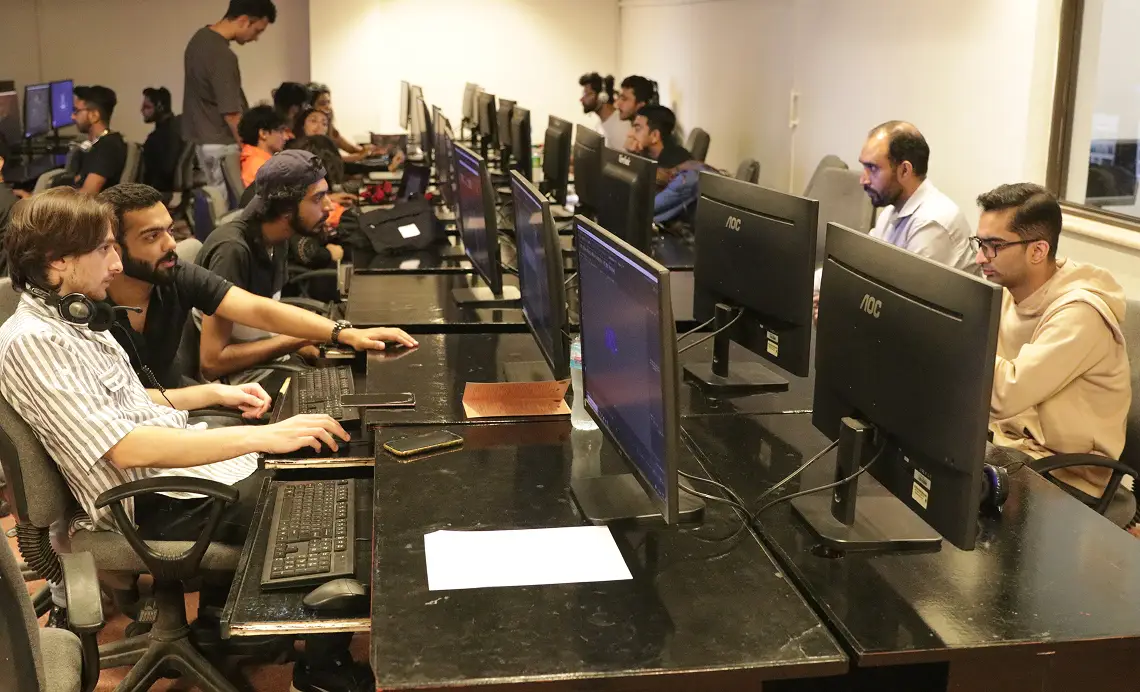
- Modern computing labs with updated hardware and software licenses.
- Reliable, high-speed internet across campus.
- Library access to technical journals and research databases.
- Career and placement offices that host tech recruiters.
- Hostel or transport options if you are commuting from another city.
BNU's Tarogil campus covers this through its IT Resource Center, dedicated computing labs, on-campus and off-campus hostel options, and the Career Development Center, which runs BNU Connect to link students with employers year-round.
Career Opportunities After Graduation
Software engineering graduates in Pakistan step into a job market that keeps expanding. Common career paths include:
- Software Developer or Full-Stack Engineer
- Mobile App Developer (iOS or Android)
- DevOps Engineer
- Quality Assurance Engineer
- Software Project Manager
- Data Scientist or AI Engineer
- System Architect
To prepare students for these roles, BNU's focus area system, mandatory internship, and two-part final year project help students graduate with a portfolio of practical work they can present to employers, alongside their academic transcript.
FAQs
Which university is best for software engineering in Pakistan?
BNU is among the top choices for software engineering in Pakistan, offering industry-focused specializations in AI, cloud computing, mobile app development, and cybersecurity, backed by hands-on learning and scholarship opportunities.
Is BNU good for software engineering?
Yes. BNU's BS Software Engineering program is NCEAC-accredited, offers focused specialization tracks, includes a mandatory internship and final year project, and provides one of the broadest scholarship ranges among private universities in Pakistan.
What is the minimum requirement to apply for software engineering at BNU?
You need at least 50% marks in Intermediate, A-Level, HSD, or an equivalent qualification, with Mathematics as a compulsory subject. Pre-Medical group students can also apply.
How much does the BS Software Engineering program cost at BNU?
For the 2026-27 academic year, tuition is PKR 321,000 per semester, plus a one-time admission fee and refundable security deposit. Scholarships can significantly reduce this cost depending on your academic profile.
Does BNU offer scholarships for software engineering students?
Yes. BNU offers merit-based, need-based, sports, institutional support, and full-tuition Vice Chancellor scholarships, along with a transgender inclusion scholarship. Eligibility depends on your academic record and, for need-based aid, your financial background.
Is a software engineering degree in demand in Pakistan?
Yes. Pakistan's IT exports keep growing year over year, and software houses, startups, and international remote employers are actively hiring software engineering graduates for development, DevOps, QA, and data-focused roles.
How long is the BS Software Engineering program at BNU?
It is a four-year, eight-semester program totaling 139 credit hours, including a mandatory internship and a two-part final year project.